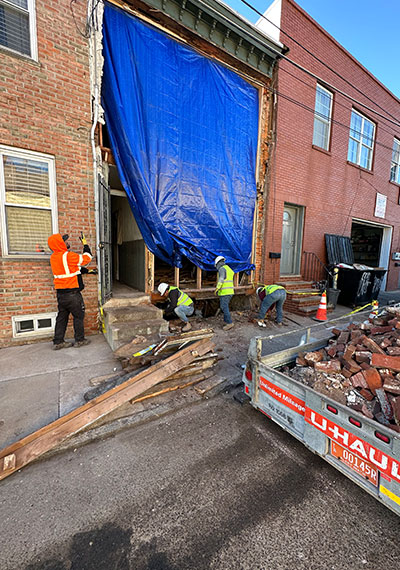
Demolishing a historic property in Philadelphia is not the same as tearing down a standard building. If a property is listed on the Philadelphia Register of Historic Places, or contributes to a local historic district, proposed demolition is subject to review by the Philadelphia Historical Commission before Licenses & Inspections can issue the needed permit.
At Philly Strong Demolition, we know that historic-property demolition involves more paperwork, more scrutiny, and more planning than a typical teardown. This guide explains the key demolition rules for historic properties in Philadelphia and why working with an experienced local contractor matters.
First: Is the Property Actually Historic?
In Philadelphia, historic-property rules apply when a building is individually listed on the Philadelphia Register of Historic Places or is located in a designated historic district where it contributes to the district’s character. Once a property is under that protection, exterior changes and demolition proposals must go through Historical Commission review.
That matters because many owners assume they only need a demolition permit. In reality, for historic properties, Historical Commission approval comes first, and Licenses & Inspections may refuse a permit application without that approval.
You Still Need a Demolition Permit
For a full teardown in Philadelphia, most projects require a Complete Demolition Permit. The City states that a complete demolition permit is needed to demolish an entire building or structure, and even removing more than two-thirds of existing framing while altering an outside wall can be treated as complete demolition. Zoning approval is also required before filing for that permit.
For some very small structures, there are exceptions. Philadelphia’s code administration materials note that a separate demolition permit is not required for certain one-story structures under 500 square feet, but that does not wipe out other historic-review requirements if the structure is protected.
Historic Review Can Stop or Delay a Demolition
Philadelphia’s historic preservation rules are strict. The Historical Commission can postpone action on an alteration or demolition application for a designated period of up to six months while it consults with the owner and other parties about preservation options. During that period, L&I defers action on the permit application.
The Commission may also attach conditions if it approves demolition. In some cases, when a historic building is approved for demolition, the owner can be required to document the structure to HABS/HAER standards at the owner’s expense before demolition moves forward.
When Will Demolition of a Historic Property Be Allowed?
Philadelphia does not treat demolition of historic buildings as routine. Under the city’s ordinance, no demolition permit should be issued for a historic building, or for a contributing building in a historic district, unless the Historical Commission finds either that demolition is necessary in the public interest or that the building cannot be used for any purpose for which it is or may be reasonably adapted.
That second standard is a big one. The code excerpt indicates the owner must make a substantial showing, including evidence related to practical sale, rental, and reuse issues, rather than simply arguing that demolition would be easier or cheaper.
Notice Requirements Matter
When a demolition application involves a historic property, Philadelphia’s rules require visible notice. The Historical Commission rules state that, within seven days after receipt of the demolition application, L&I must place notice on the property saying that the owner applied for demolition, that the property is historic or in a historic district, and that the application was forwarded for review.
That means these projects are often more public than standard demolitions. Neighbors, preservation groups, and community stakeholders may become aware of the application early in the process. For that reason alone, owners should have their paperwork, building conditions, and contractor coordination in order before filing.
Adjacent Property Protection Is a Big Deal in Philadelphia
Historic demolitions often happen in dense areas with attached buildings, narrow lots, and aging neighboring structures. Philadelphia has additional submission requirements for demolition or construction activity that may affect adjacent or adjoining buildings, and L&I provides specific guidance for projects that impact neighboring properties.
This is one reason why local experience matters so much. At Philly Strong Demolition, we understand the realities of working in tight Philadelphia conditions, especially where shared walls, limited access, and older structures increase risk.
Interior Work Isn’t Always Exempt
Some owners assume they can avoid historic review by focusing only on interior demolition. That is not always safe to assume. The Historical Commission states that its reviews focus mainly on facades and exterior features, but it can also have jurisdiction over building interiors that appear on the register.
If you are planning partial teardown, gut work, or structural removal inside a historic property, it is smart to treat the job carefully from the start. Our team handles both exterior and interior demolition and selective demolition with the level of care these sensitive projects require.
Safety, Debris, and Site Conditions Still Apply
Historic status does not remove the need for demolition safety compliance. Philadelphia demolition contractors are tested on code and OSHA-related material, and jobsite safety standards remain essential regardless of a building’s age or designation.
After approval and demolition, the site still needs to be handled properly. That can include structural debris removal, concrete breakup, hauling, and excavation prep for what comes next. Philly Strong Demolition offers concrete demolition, construction debris and junk removal, and excavating services to help move a property from teardown to build-ready condition.
Why You Should Not Treat Historic Demolition Like a Standard Demo Job
Historic demolition in Philadelphia is a specialized process. It can involve Historical Commission review, public notice, delayed timelines, added documentation, zoning approval, demolition permits, and adjacent-property protections. A contractor without local experience can easily underestimate the timeline and complexity.
That is why owners, developers, and property managers often benefit from working with a contractor who knows how Philadelphia works. You can see examples of our completed projects on the Our Work page.
Talk to Philly Strong Demolition Before You Start
If you are considering demolition work on a historic property, or even think your property might be protected, it is worth slowing down and getting the process right from the start. At Philly Strong Demolition, we help clients understand the scope of the job, coordinate the next steps, and plan demolition work with safety and compliance in mind.
Reach out through our Contact Us page to schedule an estimate and discuss your project.